


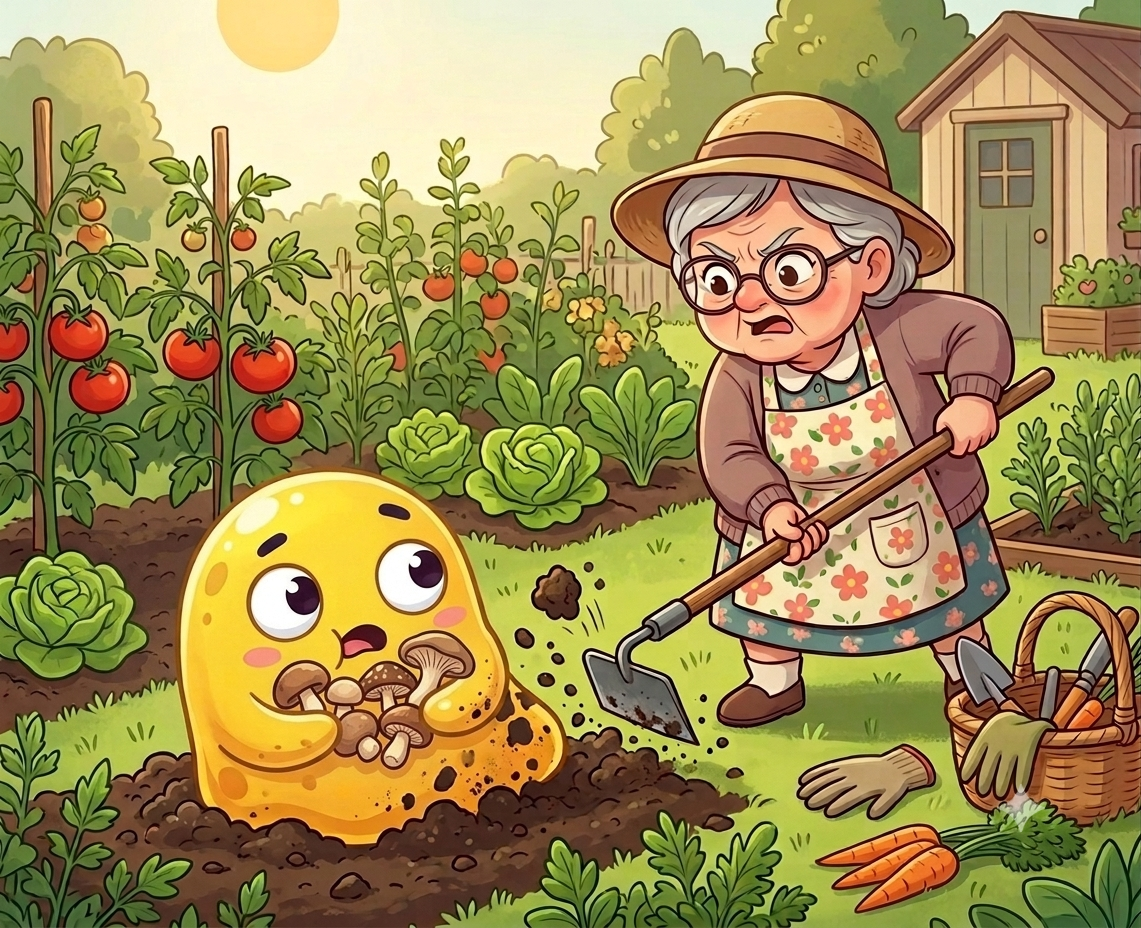
1973 - Granny Declares War on Bloby's Cousin
The NeoBloby Team · 3 min de lecture
Key takeaways
- Texas, May 1973: Marie Harris finds a white mass in her garden that grows bigger by the day and keeps coming back every time she tries to destroy it with a garden hoe.
- The story makes headlines, the rumor snowballs (firefighters, the National Guard, gunshots), and the 1958 film The Blob doesn't help - most of these dramatic details were never confirmed by any serious source.
- The real culprit: Fuligo septica, a slime mold related to Physarum polycephalum (the actual blob) but quite different, and just as harmless as a hungry pile of dead leaves.
Texas, May 1973.
Marie Harris looks out into the garden of her house in Garland, near Dallas, and spots something odd sitting on the ground.
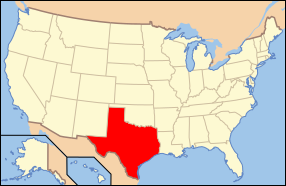 Carte des Etats-Unis avec le Texas en surbrillance rouge - pour situer l'Etat ou l'incident du blob de 1973 a eu lieu.
A white, foamy mass, about the size of an oatmeal cookie.
Nothing too alarming. Except that two weeks later, the cookie looks more like a family-sized dish.
The thing spreads, changes color, and comes back every time someone tries to destroy it. Marie attacks it with a hoe, a small garden tool. Inside, she finds a black, sticky substance.
Two days later, the mass reappears.
Even bigger.
The blob strikes back
Marie then tries to get rid of it with a product containing nicotine.
The mass then appears to ooze red and purple liquids, as if it were starting to bleed. Not exactly the ideal show to reassure the neighbors.
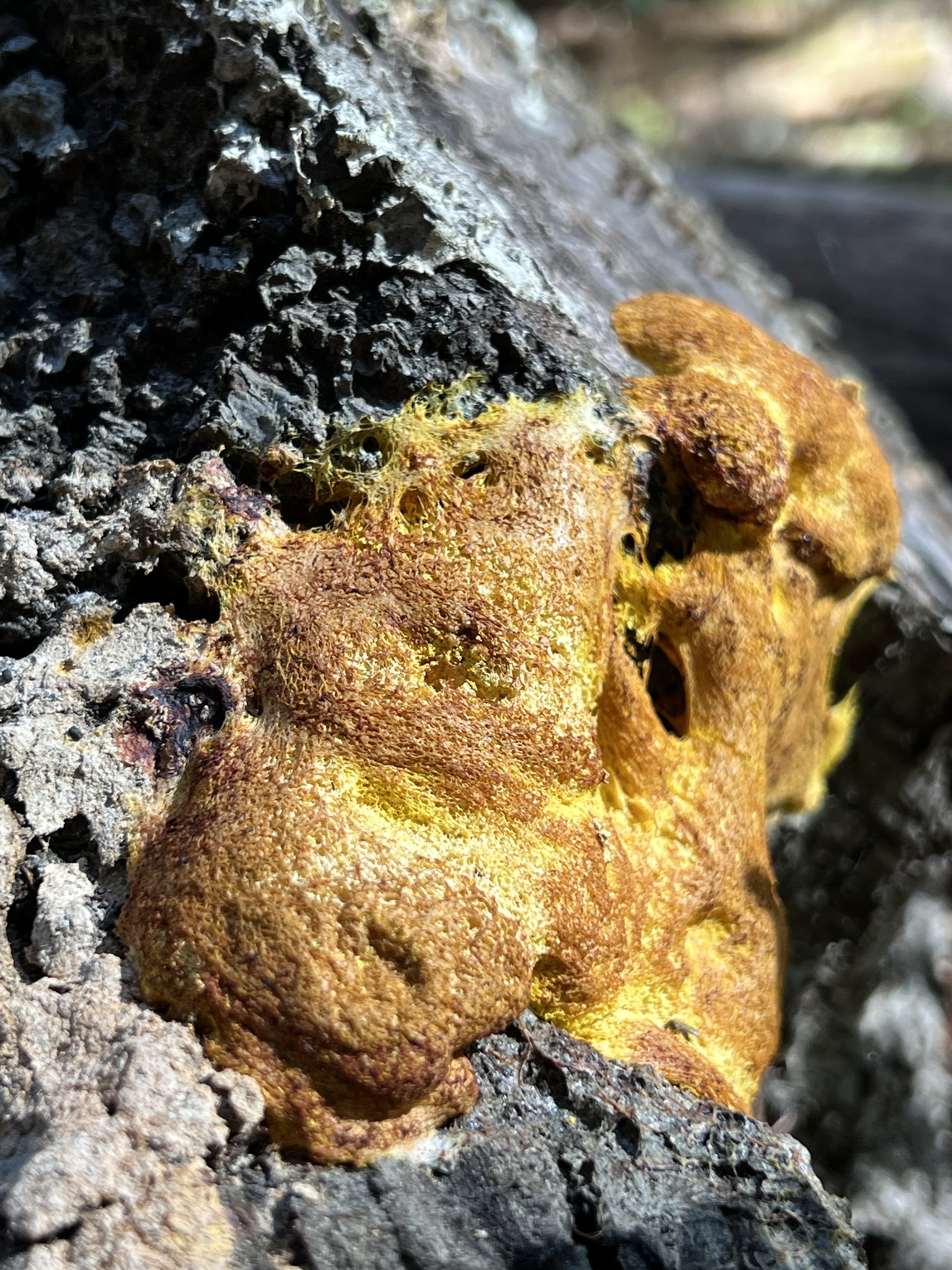 Fuligo septica en fin de cycle, teinte rouille/brune sur ecorce - le stade qui a fait croire que la masse de Garland saignait. Photo : Reagan Peschke, CC BY 4.0, Wikimedia Commons/iNaturalist.
One of them even claims to have seen a similar mass climbing up a telephone pole.
Naturally, the newspapers grab hold of the story.
The film The Blob came out in 1958. It tells the story of an alien jelly that grows by swallowing everything in its path. So when a sticky mass shows up in Texas, shrugs off hoe blows, and appears to bleed, everyone's imagination runs wild.
Marie Harris claims the thing reached sixteen times its original size in just two weeks.
Then the story itself starts growing too.
An account published later claims that firefighters attacked the mass with a fire hose. The spraying mostly just scattered it around. Residents are then said to have called in the National Guard.
The monster loved dead leaves
Scientists eventually get around to examining the mysterious invader.
It turns out to be Fuligo septica, a living organism belonging to the slime mold group.
A slime mold looks a bit like a fungus, but it can move very slowly in search of food. It often appears on pieces of wood, dead leaves, and damp soil.
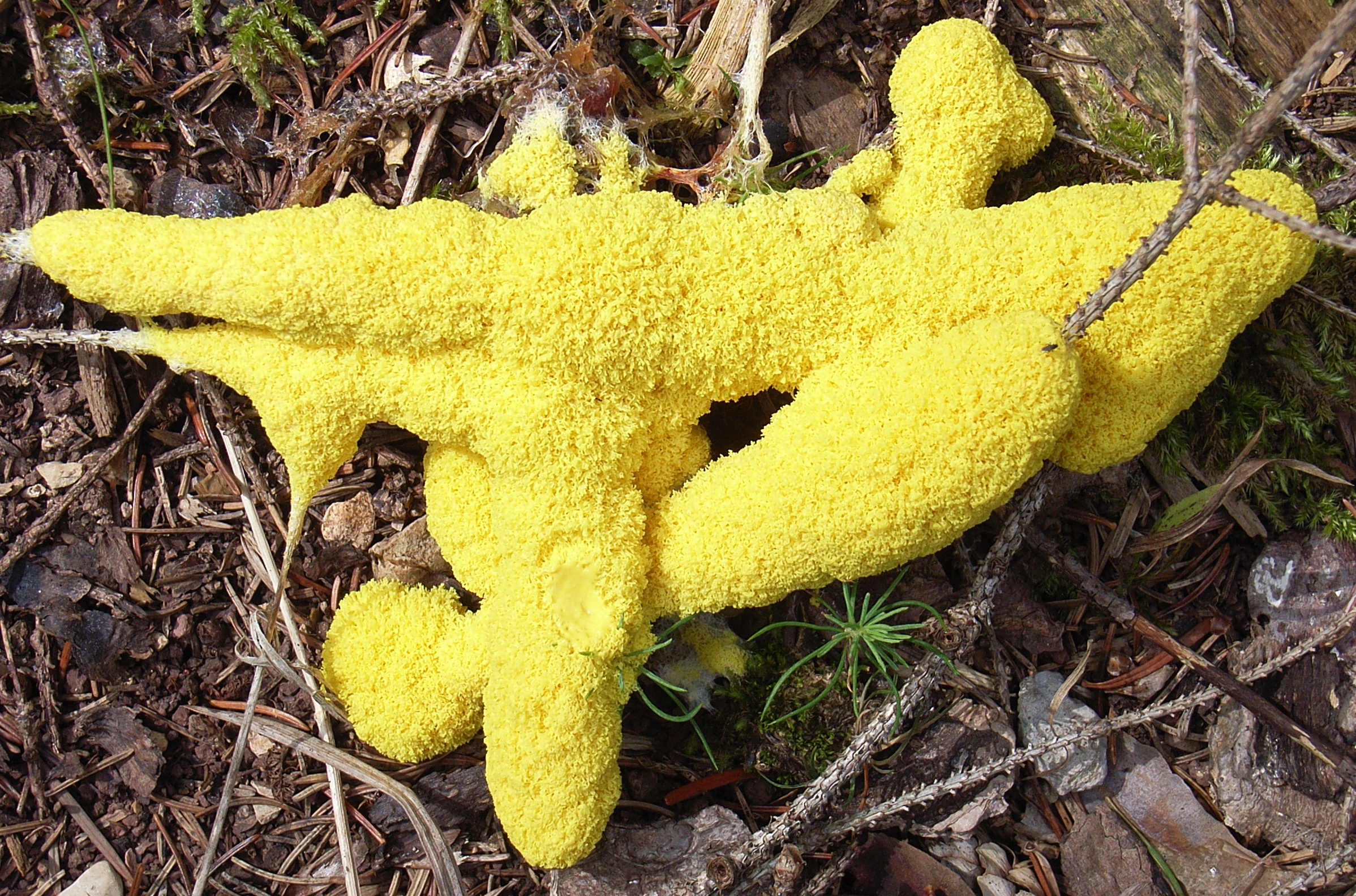 Fuligo septica jaune vif sur litiere de bois mort et aiguilles de pin, son habitat typique. Photo : Siga, domaine public, Wikimedia Commons.
It doesn't eat humans, animals, or houses. Mostly, it engulfs tiny things, like the bacteria found in decomposing plant matter.
In other words, it wasn't preparing an invasion of Texas.
It was simply enjoying a damp garden with an all-you-can-eat buffet.
One important detail: Fuligo septica isn't exactly Physarum polycephalum, the species we usually call "the blob" in France. They're two different organisms, close enough to belong to the same larger group.
After a few weeks, the mass finally dries up and vanishes as mysteriously as it arrived.
So in 1973, Texas didn't face a monster from outer space.
Just a big, gooey omelette that had decided to squat in the wrong garden.


Ready to welcome your own blob?
Discover our complete rearing kits, designed to watch the blob wake up, feed, and grow at home.
Shop the kits


No comments yet.