Chargement

The NeoBloby Team
Texas, May 1973: Marie Harris finds a white mass in her garden that grows bigger by the day and keeps coming back every time she tries to destroy it with a garden hoe. The story makes headlines, the rumor snowballs (firefighters, the National Guard, gunshots), and the 1958 film The Blob doesn't help - most of these dramatic details were never confirmed by any serious source. The real culprit: Fuligo septica, a slime mold related to Physarum polycephalum (the actual blob) but quite different, and just as harmless as a hungry pile of dead leaves.

The NeoBloby Team · August 24, 2026
Audrey Dussutour (CNRS, Toulouse) launched the participatory project "Derrière le blob, la recherche," with 3,500 volunteers. Two species were tested, Physarum polycephalum and Badhamia utricularis, exposed to heatwaves simulated with an infrared lamp. Badhamia showed up to 75% mortality during intense, prolonged heatwaves; Physarum copes better with a gradual rise than with a sudden spike. The study's message: it is the intensity and amplitude of heat spikes that threaten these organisms, despite outweighing all animal biomass 32 times over.
The NeoBloby Team · August 10, 2026
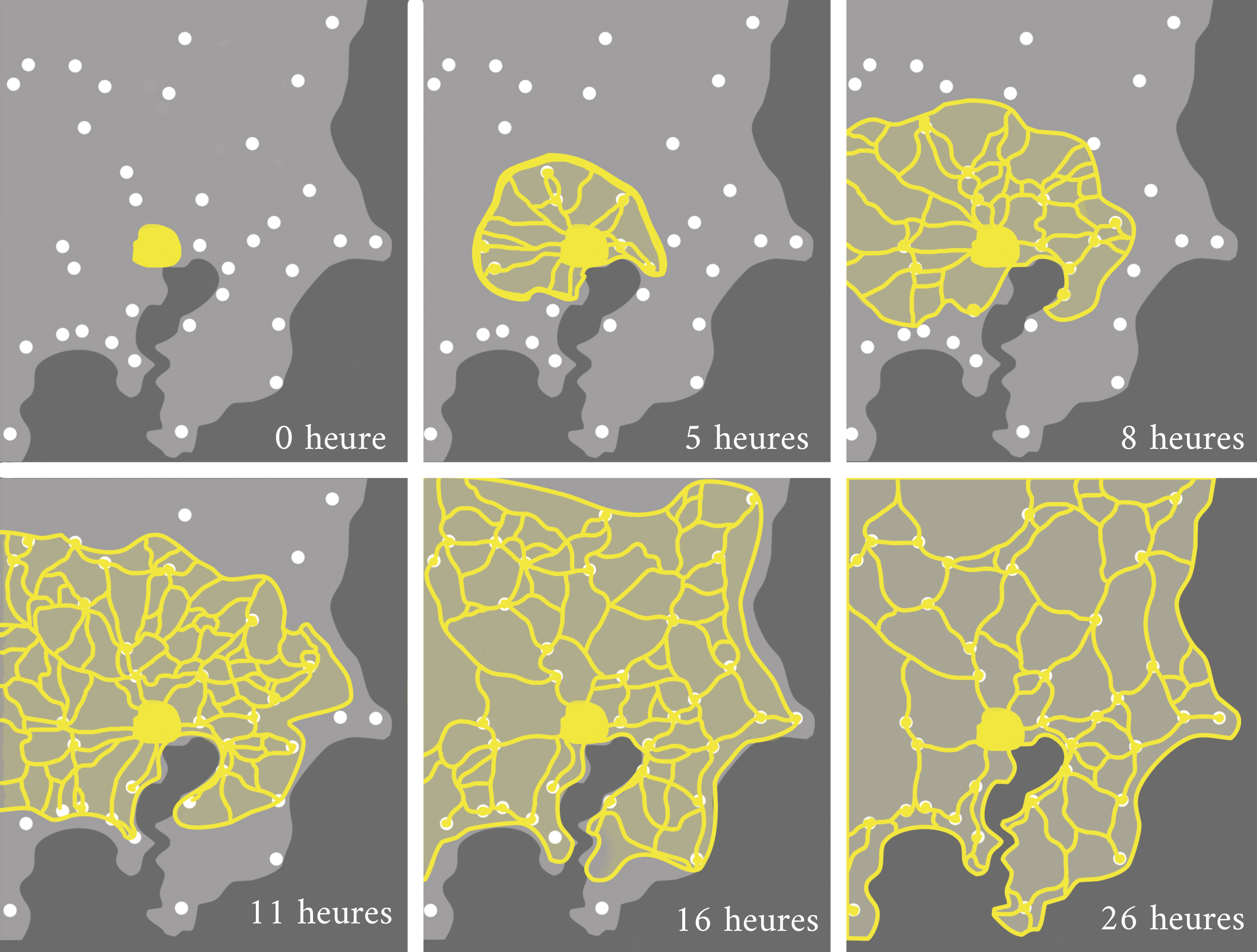
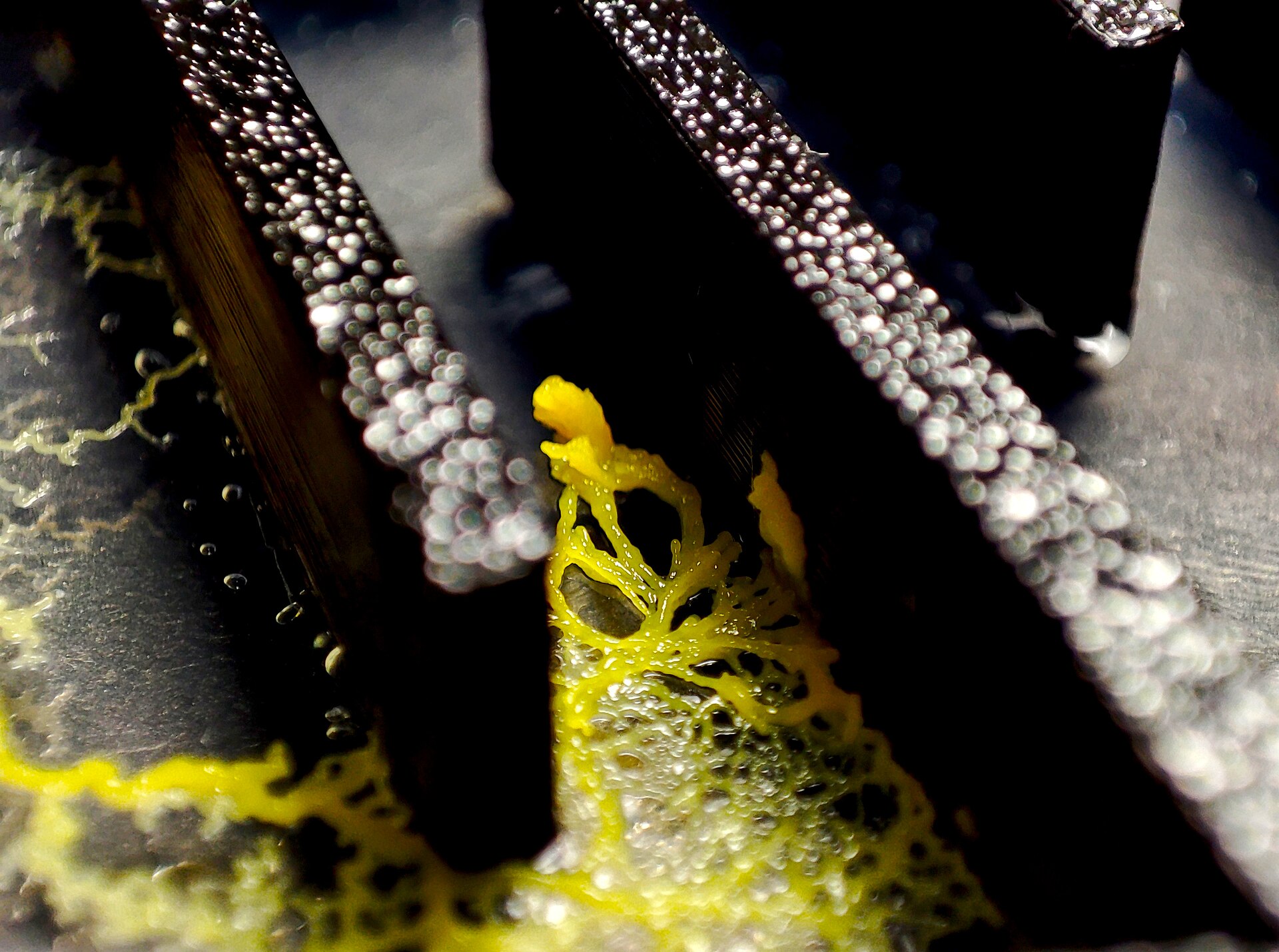
In 2010, a team led by Atsushi Tero (Hokkaido University), with Toshiyuki Nakagaki and researchers from Oxford, publishes a new experiment in Science: the maze is replaced by a map of the Tokyo region. Thirty-six oat flakes mark the surrounding cities, light simulates mountains and waterways (the blob flees it), and within 26 hours the network stabilises. Result: a mesh whose cost, efficiency and fault tolerance are comparable to Tokyo's real rail network, built by generations of engineers. This behaviour is then translated into a mathematical model, reused since to design resilient telecommunications and infrastructure networks.
The NeoBloby Team · August 10, 2026
In 2000, researcher Toshiyuki Nakagaki (RIKEN, Nagoya) publishes a now-famous experiment in Nature: a Physarum polycephalum plasmodium, cut up and reassembled inside a maze with four possible routes, finds the shortest path between two food sources within 8 hours. No brain, no neurons: the blob consistently picks the shorter branch when the gap is clear-cut (22%), but hesitates when the gap is only 2%, within the margin of measurement error. The discovery earns the team an Ig Nobel Prize in Cognitive Science in 2008, and paves the way for even more spectacular experiments on optimized networks.
The NeoBloby Team · July 31, 2026
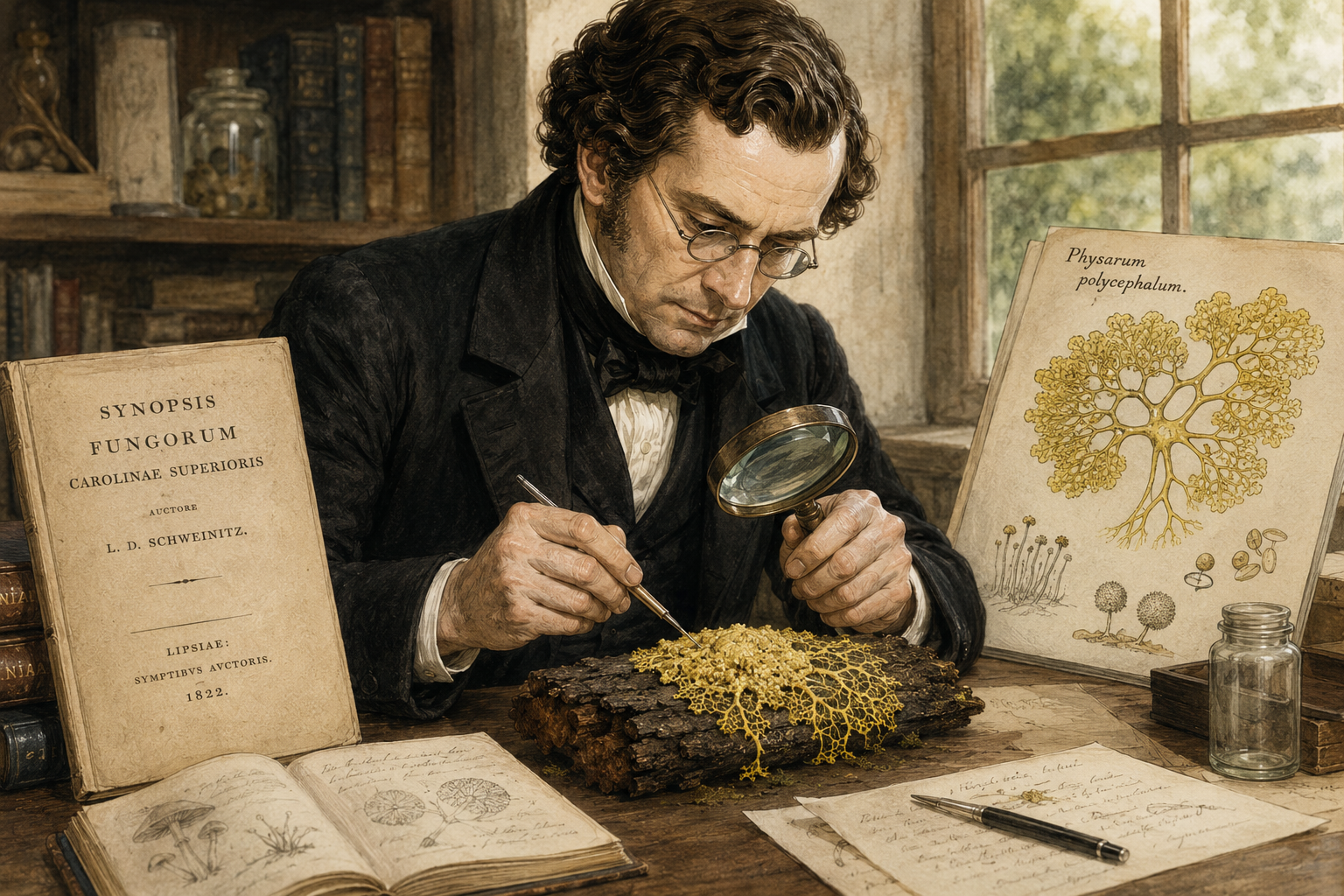
In 1822, naturalist Schweinitz spots a yellow mass growing on dead wood and producing spores - with the tools of his time, everything points to a fungus, so he formally describes it as Physarum polycephalum. Two centuries later, modern microscopes and genetic analysis flip the verdict: it's not a fungus but a giant amoeba, a single cell that can move around with no brain and no muscles. The name Schweinitz gave it still stands - only the classification changed. Fair enough: back then, something growing on damp wood and releasing spores looked exactly like a fungus.